


Hanoi Noodle Soups Beyond Pho: A Local Guide to What to Try Next
Updated: 1 day ago

HANOI NOODLE SOUPS BEYOND PHO
Pho is the bowl almost everyone knows before arriving in Hanoi. But if phở is the only noodle soup you try, you miss a large part of how the city actually eats. Hanoi has many more noodle dishes, each one has its own noodle, broth, texture and moment of the day. Here are five Hanoi noodle soups beyond phở and what makes each one memorable:
Bun Rieu: Crab, Tomato and Bright Sourness
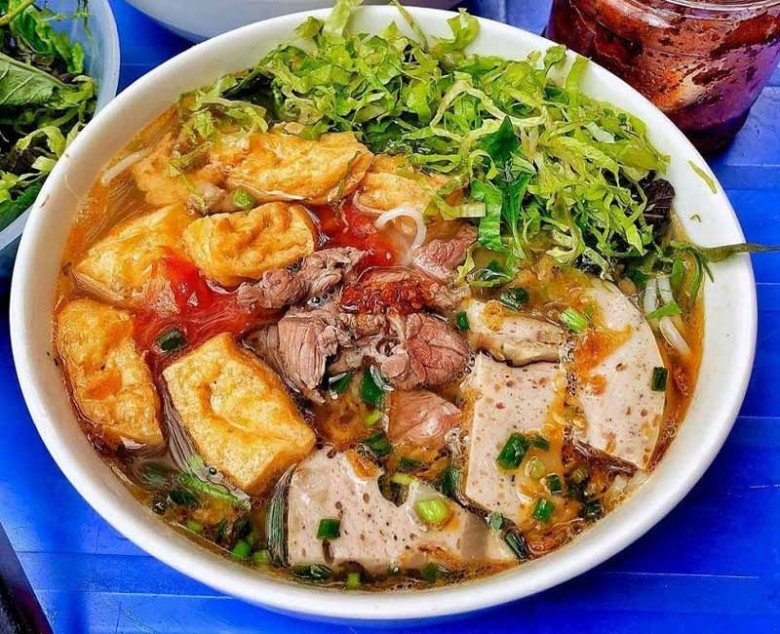
Bún riêu brings together crab, tomato and a bright, gently tangy broth. Tofu, beef and other toppings may join the bowl depending on the cook, which means every version has a little personality of its own.
What to notice first is the broth: savory, slightly sour and much less restrained than phở. If that sounds like your kind of bowl, our Bun Rieu in Hanoi guide goes deeper into the ingredients and what to expect when ordering.
Bun Thang: Hanoi’s colorful, detailed bowl
Bún thang has a delicate broth topped with carefully prepared ingredients such as shredded chicken, fine strips of egg, Vietnamese ham and herbs. The charm is in the balance, color and care that bring all those small pieces together.
This is a good Hanoi noodle soup beyond pho if you like clean flavors and want to see how detailed Hanoi cooking can be without relying on strong spice or heavy sauce. Read Bun Thang in Hanoi for a closer look at the bowl.

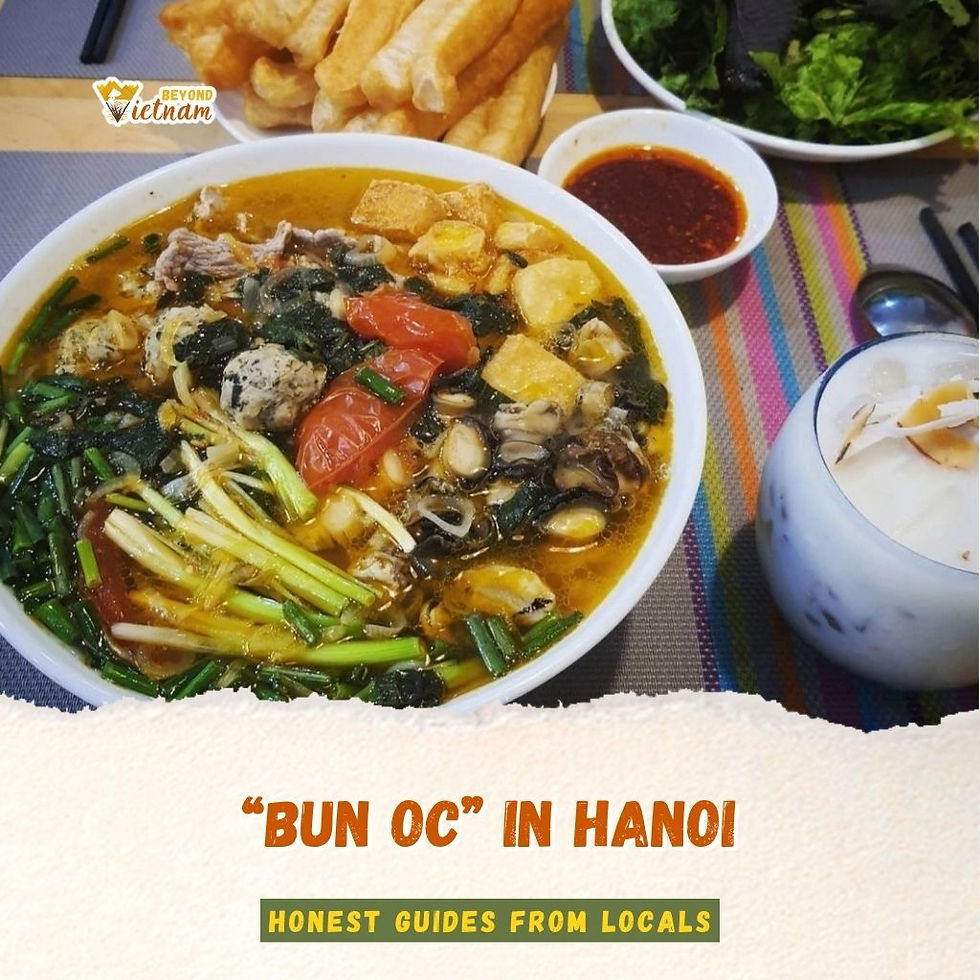
Bun Oc: Snails in a Sour Tomato Broth
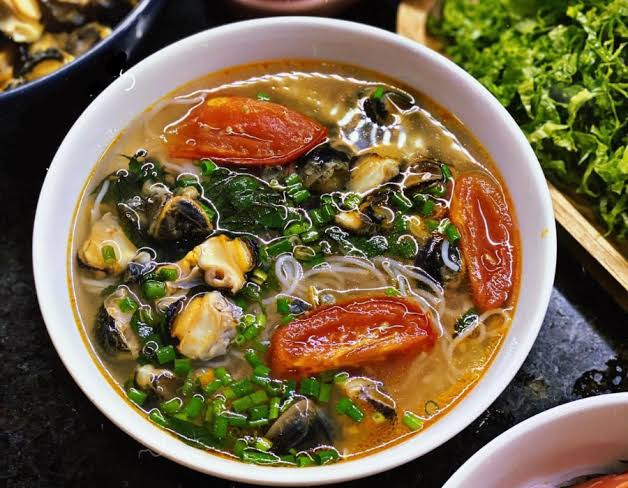
For many first-time guests, the broth is the easiest introduction to bún ốc. Tomato, herbs and gentle sour notes create a fresh, lively base, while the snails add a pleasantly firm, chewy texture. Our Bun Oc in Hanoi guide explains the dish in more detail.
Bun Doc Mung: The Texture Most Visitors Cannot Name
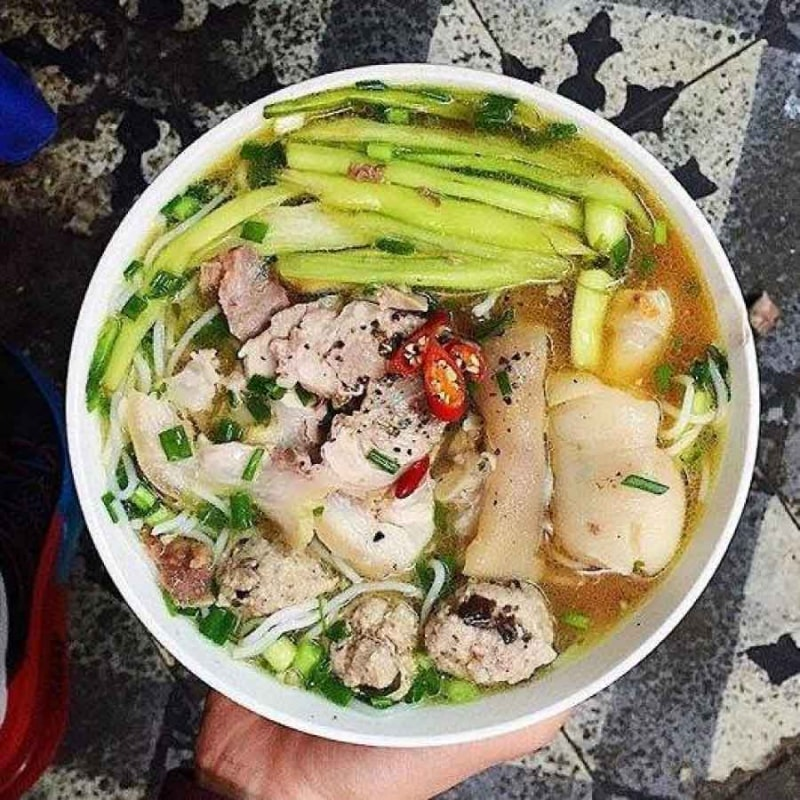
Bún dọc mùng is memorable because of the dọc mùng itself: taro stems prepared so they soak up the broth while keeping a light, slightly spongy crunch. With rice vermicelli and a pork-based broth, the bowl can feel familiar at first and then surprises you with every bite of the stems. See Bun Doc Mung in Hanoi for the full guide.
Mien Luon: Glass Noodles and Eel
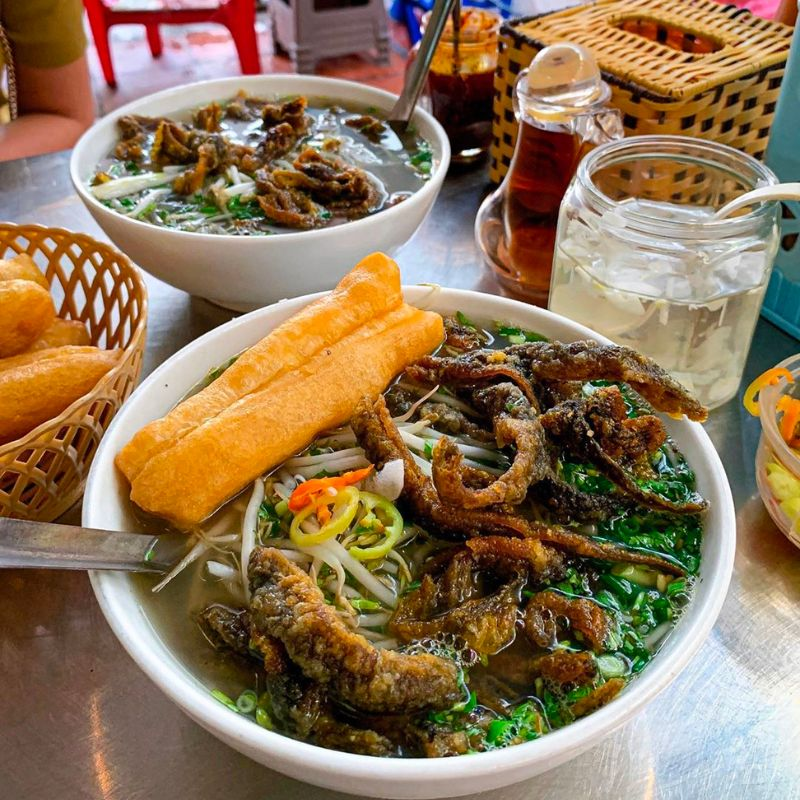
Miến lươn is another Hanoi noodle soup beyond pho worth trying. The glass noodles are light and springy; the eel may be soft or fried until crisp. Depending on the shop, you may find it as a soup or as a drier mixed bowl, so the same name can lead to quite different eating experiences. If you enjoy trying new dishes, this is the bowl to look for. Read Mien Luon in Hanoi before you order your first one.
For a wider overview, see Breakfast in Hanoi and Where to Eat in Hanoi Old Quarter. If you would rather explore with a local and understand more Hanoi noodle soups than just the dish names, Taste of Hanoi is our broader walking introduction to Hanoi through food, neighborhood stories and the small eating habits that are easy to miss when you are exploring alone.
Dung (Emma) Co-founder of Beyond Vietnam
Xin chào! I’m Dung, but many travellers call me Emma. I grew up on the outskirts of Hanoi, and no matter how far I travel, this busy and slightly chaotic city still feels most like home.
I’ve explored Vietnam on my own and with the people I love, while also spending years volunteering and joining community projects. Along the way, I’ve collected plenty of stories, local tips and unforgettable moments. I share them here to help you feel closer to Hanoi and Vietnam, hopefully even before you arrive.
You can also find me on Facebook. Come and say hi!


Comments