


15 Local Foods Hanoians Crave When Winter Comes
Updated: Sep 9

When winter arrives in Hanoi, the city slows down just a little. The air turns cool, streets feel quieter, and locals instinctively start craving one thing comfort food. Not fancy dishes, not restaurant dining, but local foods eaten on small stools, shared with friends, and cooked by familiar faces who have been feeding the neighborhood for decades.
These are the 14 Hanoi winter foods locals truly crave, found at local vendors, often in hidden spots, deeply connected to daily life. Eating them is also one of the simplest ways to support locals, many of whom are women-led street food sellers keeping family recipes alive.
Thit xien nuong (Grilled pork BBQ skewer)
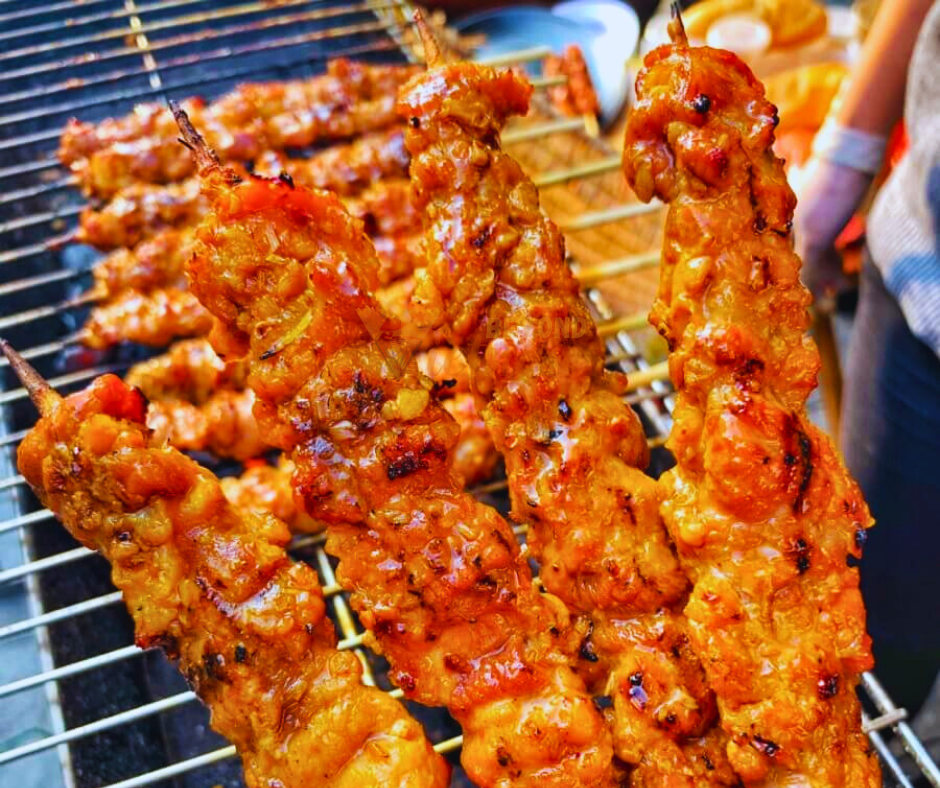
Few things feel more like a Hanoi winter than the smell of pork skewers sizzling over a charcoal grill. Marinated with a sweet and savory blend, the meat turns smoky, juicy, and slightly caramelized around the edges.
Locals often gather around these tiny sidewalk grills, warming their hands by the fire while enjoying one skewer after another. Simple, smoky, and wonderfully satisfying - especially when the winter air starts to bite.
Nem chua nuong (Grilled sour pork sausage)
Nem chua nướng is fermented pork sausage grilled until slightly crispy outside and juicy inside. It’s smoky, sour, and addictive, often served with chili sauce.
Locals eat nem chua nướng in the evening, usually with friends while standing or sitting around small grills. These local vendors are often young women or family teams running simple sidewalk setups, full of energy and laughter.

Chan ga/canh ga nuong (Grilled chicken feet/wings)
Another favourite, especially among the younger crowd, is grilled chicken feet and wings. This may sound unusual to you, but Hanoians absolutely love this dish, which is usually eaten late at night with friends! 😍
The chicken feet and wings are perfectly marinated in a blend of aromatic spices, brushed with a layer of honey and skewered on bamboo sticks before being grilled over hot charcoal. The result? Golden, crispy skin with a delicious smoky aroma, while the meat inside remains tender and juicy. Each bite is a perfect balance of texture and flavour - crunchy, savoury and slightly sweet.

Oc luoc (Boiled snails)
While other regions in Vietnam favor stir-fried snail dishes, Hanoians (whether from rural areas or the city) have a deep love for the simplicity of boiled snails. Sure, we enjoy snails prepared in various ways, but nothing beats the classic appeal of ốc luộc - warm, fragrant, and comforting. Locals gather around snail stalls in the evening, eating slowly and chatting for hours.
The snails are thoroughly cleaned, then boiled with lemongrass, ginger, and either lime or pomelo leaves to give them with a delicate aroma. But the real star of this dish? The dipping sauce. Crafted from fish sauce, sugar, salt, kumquat juice, ginger, lemongrass, garlic, chili, and lime leaves, it’s a perfect balance of sweet, tangy, and spicy flavors that take the snails to the next level.

Banh troi tau (Vietnamese mochi soup)
"Bánh trôi tàu" has long been a cherished part of Hanoi's culinary heritage. The soft, chewy rice balls float in a warm, amber-coloured syrup infused with the spicy aroma of ginger. The outer layer is smooth and tender, while the filling of fragrant black sesame and crunchy peanuts offers a blend of nuttiness and subtle sweetness. The syrup, sweetened with cane sugar and spiced with aged ginger, ties it all together with a harmony of sweet and spicy.

Che san nong (Cassava sweet soup)
This sweet soup combines the gentle sweetness of cassava with the spicy warmth of ginger, creating a comforting treat that feels like a cozy hug. The cassava pieces are soft and chewy, swimming in a golden brown, thick syrup that’s perfectly balanced in sweetness. Served piping hot, chè sắn nóng is the ideal antidote to a chilly day.
People usually eat chè sắn nóng in the evening, chatting with friends or family after dinner. It’s often sold by women in small pushcarts or tiny shops tucked into hidden spots around old neighborhoods.

Banh duc nong (Hot rice pudding)
Bánh đúc nóng is one of those simple, soul-satisfying dishes that Hanoians love. A creative twist on the traditional bánh đúc lạc (rice cake with peanuts), it is a popular choice for breakfast or a light meal.
The rice cake is made from a smooth blend of rice flour and water, giving it a soft and velvety texture. The filling is a delicious mix of minced pork, wood ear mushrooms, tofu and spring onions, creating a savoury and aromatic combination. Served hot in a bowl, the dish is topped with a rich broth and garnished with coriander and fried shallots for an extra touch of flavour.

Chao suon (Pork rub porridge)
Cháo sườn is a beloved, comforting dish that has been part of Hanoi's food culture for generations. It's originally a simple porridge served with crispy quẩy (fried dough sticks), plenty of black pepper and a dash of chilli powder if you like a bit of heat. It's the perfect meal for any time of day, but especially in the evening or late at night.
But over time, street vendors have adapted this dish to cater to changing tastes. Now, you’ll find many variations, with toppings like savory minced pork stir in fish sauce, stir-fried clams with onions and Vietnamese coriander, or even sausage for kids. Some stalls add pork floss (ruốc heo), fish floss (ruốc cá), or fried shallots to enrich the flavor, giving each bowl its own unique twist.

Banh gio (Pyramid rice dumplings)
Bánh giò is a soft rice dumpling filled with minced pork and mushrooms, wrapped in banana leaves and steamed. It’s lightly peppery, not flashy, just warm and comforting.
Locals grab bánh giò for breakfast or a quick afternoon bite, usually sitting on tiny stools briefly or taking away. These are everyday foods sold by small local vendors near schools, markets, and bus stops, woven into daily life.

Banh chuoi/khoai (Banana/sweet potato fritters)
Banana fritters are made from ripe Sứ bananas, selected for their natural sweetness, which ensures no bitterness when fried. Sweet potato fritters are made from thinly sliced sweet potatoes, which are soaked to remove excess starch before being fried to a golden crisp. Each fritter is crispy on the outside, rich and indulgent, with a soft, sweet banana filling inside. The sweet potato fritters offer a satisfying crunch with an earthy, slightly sweet flavour, enhanced by the natural sweetness of the banana. Freshly fried to order, these treats are perfect for a warm, delicious snack.

Banh goi (Fried pillow dumplings)
Bánh gối, or "fried pillow dumplings", is one of Hanoi's most popular street foods. However, many people have confused them with Spanish empanadas, so let's see what the difference is.
Shaped like a small pillow, these dumplings are deep-fried to golden, crispy perfection with a delicious filling that's both savoury and satisfying. The filling typically includes spiced minced pork, sweet Chinese sausage, wood ear mushrooms (mộc nhĩ) and a special twist - fried quail eggs - adding a touch of richness and a little surprise to every bite.
The outer crust of bánh gối is made of thin, light dough, which ensures that the dumplings remain crisp without being too greasy. These dumplings are often served with fresh herbs and a side of sweet and sour dipping sauce, which perfectly balances the savoury flavours of the filling.

Banh chung ran (Fried sticky rice cake)
Bánh chưng is an essential part of the Vietnamese New Year (Tết) celebrations, symbolising the earth with its square shape and simple yet delicious ingredients. After Tết, many families have leftover bánh chưng, which they deep-fry to give the cake a crispy exterior while keeping the inside soft and flavoursome. The fried version adds a satisfying crunch and a warm, comforting flavour that's perfect for colder weather.

Ngo/khoai nuong (Grilled corn/sweet potatoes)
As winter sets in, take a stroll through the streets of Hanoi and you'll soon come across a small sidewalk stall selling grilled corn (ngô nướng) and sweet potatoes (khoai nướng). These humble stalls are far from fancy. All they have is a charcoal grill, a few small plastic chairs that double as seats and tables, and the warmth of sizzling snacks that draws people from all corners of the city.
It's not just about the food - it's about the experience. Locals gather around these stalls to enjoy the simple pleasure of freshly roasted corn and sweet potatoes, chatting and laughing with friends or family, their faces lit by the soft glow of the grill.

Cha ca (Pan-fried turmeric fish and dill)
Chả Cá is a classic Hanoi dish that requires careful preparation - fresh fish is marinated, grilled over charcoal and served sizzling hot. It's typically eaten with rice noodles, roasted peanuts, dill and a spicy dipping sauce made from mắm tôm (fermented shrimp paste), lime, sugar and fried fish oil.
On a cold winter day, there's nothing better than gathering around a hot pan of chả cá, enjoying the smoky fish and rich flavors with friends and family. It's a perfect winter treat that captures the essence of Hanoi.

Lau (Hotpot)
A hot pot, or lẩu, is the perfect dish for cold winter days in Hanoi. Made with a variety of fresh ingredients such as meat, seafood, vegetables and noodles, it's served bubbling and hot, bringing warmth to everyone at the table. The beauty of lẩu is that it's not just about the food, it's about the experience. You sit around the pot, cooking together, sharing stories and connecting with friends and family. It's the perfect bonding dish for the cold season.

15 Local Foods Hanoians Crave When Winter Comes: More Than Just a List
Winter food in Hanoi isn’t about ticking dishes off a list. It’s about sitting a little lower, eating a little slower, and letting the cold give you a reason to stay longer.
If reading about these local foods makes you curious to try them the local way, our Taste of Hanoi food tour is simply a slow walk through everyday life. We eat at small local vendors, visit hidden spots we personally love, and share authentic food stories that don’t show up on tourist menus.
Related reading: Hanoi noodle soups beyond pho, Hanoi afternoon snacks and Hanoi food guide.
Dung (Emma) Co-founder of Beyond Vietnam
Xin chào! I’m Dung, but many travellers call me Emma. I grew up on the outskirts of Hanoi, and no matter how far I travel, this busy and slightly chaotic city still feels most like home.
I’ve explored Vietnam on my own and with the people I love, while also spending years volunteering and joining community projects. Along the way, I’ve collected plenty of stories, local tips and unforgettable moments. I share them here to help you feel closer to Hanoi and Vietnam, hopefully even before you arrive.
You can also find me on Facebook. Come and say hi!


Comments