


North vs Central vs South Vietnam: Why Are They So Different?
Updated: Sep 9

Order a bowl of pho in Hanoi and another in Ho Chi Minh City and, at first glance, they may seem like the same dish. Then you notice the broth tastes different, the herbs are different, the condiments on the table have changed, and locals may have very different ideas about what a good bowl of pho should taste like.
Keep travelling and the differences become much bigger than food. Accents change, weather changes, markets look different, and even everyday words can vary from one region to another. The differences between North Central and South Vietnam are not simply matters of local preference. They were shaped over centuries by geography, climate, agriculture, migration, trade and political history.
1. Geography and the Differences Between North Central and South Vietnam
Vietnam may look quite small on a world map, but travelling through it tells a different story. Northern Vietnam has the clearest seasonal changes. Hanoi can be very hot and humid in summer, pleasantly cool in autumn, damp and surprisingly cold in winter, then humid again in spring. Farther north in the mountains, the contrast becomes even stronger. This is why choosing the best time to visit Vietnam is not as simple as picking one national weather window.
Southern Vietnam stays warm for most of the year, so life is shaped more by wet and dry seasons than by a cold winter. Central Vietnam sits between the two, but its landscape creates another pattern. In many places, mountains come close to the sea, leaving narrow coastal plains that are more exposed to heavy rain, storms and flooding.
These differences affect much more than what people wear. They influence what farmers can grow, which ingredients are easy to find, how food is preserved, where communities develop and how people adapt their daily routines to the weather. Over generations, practical choices slowly become habits, and habits eventually become part of local culture.
2. Northern Vietnam: The Red River, Strong Seasons and Older Traditions
Northern Vietnam developed around the Red River Delta, one of the oldest centres of Vietnamese civilisation. Hanoi and the surrounding region have been important political and cultural centres for centuries, so many northern traditions grew within long established village communities, family structures and court culture. You can still feel that history in ancestral worship, village festivals, Tet traditions and the way certain foods are connected to particular occasions or seasons.
Seasonal eating is especially noticeable in Hanoi. Locals often talk about autumn flowers, winter snacks or dishes that suddenly feel right when the weather turns cold. Food is not only about taste here; it is often connected to a specific time of year. If you visit Hanoi in January, for example, the city feels very different from the same streets in summer.
Northern food is often more restrained in sweetness and chilli than food farther south. That does not mean it lacks flavour. Much of the complexity comes from broth, fermented ingredients, herbs, dipping sauces and careful balance. Hanoi style pho is an easy example: the broth usually carries most of the flavour, while the bowl may arrive with fewer herbs and sauces than a southern version. Bun thang looks delicate too, but many ingredients are prepared separately before being carefully combined.
3. Central Vietnam: A Narrow Land Between Mountains and Sea
Central Vietnam developed under very different conditions. In many areas, there is less flat agricultural land than in the large northern and southern deltas. Mountains rise close to the coast, rivers are shorter, and some provinces regularly experience storms, heavy rain and flooding. These conditions did not create Central Vietnamese cuisine by themselves, but they helped shape how people used and preserved ingredients.
Salted foods, fermented seafood, stronger dipping sauces and chilli became important in many local kitchens, while the long coastline made seafood a natural part of everyday cooking. This is one reason Central Vietnamese food can feel more intense, with more heat, saltiness and fermentation packed into relatively small dishes. But describing the whole region as simply spicy misses a lot.
Hue is the clearest example. As the former imperial capital of the Nguyen Dynasty, Hue developed a tradition of royal cooking alongside ordinary family food. A simple noodle dish can exist beside a meal of many small, carefully prepared plates. Hoi An developed differently again because of its history as an international trading port, while the Central Highlands have their own landscapes, ethnic communities and food traditions. Central Vietnam is therefore a collection of local cultures rather than one single regional style.
4. Southern Vietnam: The Mekong, Migration and a More Open Food Culture
The South has a different historical story. Vietnamese communities expanded gradually southward over several centuries into areas with existing Khmer communities and strong links to regional trade. This wider historical process is often called Nam Tien, but it was much more complicated than people simply moving south. Political expansion, migration, conflict and cultural exchange all played a part.
The result was a region where different communities, ingredients and traditions met. Chinese migration had a strong influence, especially in urban and commercial centres, and Saigon later developed into an important trading city that continued to absorb ideas from many places. The Mekong Delta added another major influence: its rivers, canals and fertile farmland support rice, fruit, coconut, vegetables, herbs and freshwater fish in abundance.
That abundance is one factor behind the sweeter, more generous style often associated with Southern Vietnamese cooking. Coconut appears naturally in many dishes, fresh herbs and vegetables are often served in larger amounts, and dipping sauces may have a sweeter balance. Pho makes the contrast easy to see. In Ho Chi Minh City, a bowl may come with bean sprouts, several herbs, sauces and extra condiments; in Hanoi, it can look comparatively simple. Neither version is the correct one. They reflect different ideas of what the same dish should taste like.
5. Why Food Changes So Much Across Vietnam
Food is probably the easiest place to notice all these regional influences. What grows locally, how people preserve it, who they have traded with and what families have cooked for generations all eventually end up on the plate. In the North, stronger seasons and long food traditions helped shape a cuisine closely connected to broths, seasonal ingredients and balanced seasoning. In Central Vietnam, the coastline, weather and preservation traditions contributed to stronger fermented, salty and spicy flavours. In the South, the fertile Mekong, tropical produce, migration and trade encouraged sweeter flavours, generous herbs, coconut and a wider mix of influences. If you start your trip in Hanoi, this Hanoi food guide is a useful way to notice some of those northern habits in real life.
The same Vietnamese dish can therefore change considerably as it travels. Noodle soups, spring rolls, sticky rice cakes and dipping sauces may all look or taste different depending on where you order them. So when someone asks for the Vietnamese way to prepare a dish, there is not always one answer. Sometimes the most Vietnamese answer is simply: which region?
6. Even Vietnamese Sounds Different
Regional differences are easy to hear too. Vietnamese pronunciation changes noticeably between the North, Central and South, and the Hanoi accent is one of the versions most foreign learners encounter first. Travel south and several sounds change; in parts of Central Vietnam, accents can be so different that even Vietnamese people from another region sometimes need a moment to adjust.
Vocabulary changes as well. A pineapple, for example, may be called dứa in much of the North, while thơm or khóm are common farther south. Everyday objects, foods and expressions can have several perfectly normal regional names. Distance and geography helped these local ways of speaking develop over time, long before modern transport made moving around the country easy.
For travellers learning a little Vietnamese, this is part of the fun. If you learn one word in Hanoi and hear something different in Hue or Ho Chi Minh City, it does not necessarily mean you learned it wrong. You may simply be hearing another regional way of saying the same thing.
7. The Differences Continue at Home
Regional culture also appears in architecture and family life. Traditional homes in some Northern villages developed around courtyards, family compounds and spaces for ancestral worship. Hue has its own garden house traditions, while the architecture of the former imperial capital reflects another layer of history.
In the Mekong Delta, rivers and canals shaped where and how communities grew. Homes, markets and businesses often developed close to waterways because boats were once among the most practical ways to move people, food and goods. Climate matters too. A Northern home has to deal with both cold, damp winters and very hot summers, while a Southern home is designed mainly around heat, rain and ventilation.
Tet gives another easy example. Families across Vietnam celebrate the same national holiday, but the table changes as you travel. Northern Tet is strongly associated with banh chung, pickled onions and dishes suited to cooler weather. Banh tet is especially common farther south, while fillings, pickles and side dishes vary according to local ingredients and family traditions. The holiday is shared across the country, but what happens inside each family kitchen remains very local.
8. What About Regional Stereotypes?
Vietnamese people often joke about regional personalities. You may hear Northerners described as more reserved, Central Vietnamese as tougher or more careful, and Southerners as relaxed and open. Some of these ideas grew out of different regional histories, but they are not useful rules for judging individual people.
Older political and village structures influenced parts of Northern society. Communities in Central Vietnam spent generations adapting to difficult weather and limited farmland. The South was strongly shaped by migration, new settlements and trade. Those histories can help explain certain habits and local attitudes, but they do not tell you what the person sitting across from you will be like. Regional culture gives useful context; it does not define personality.
9. What Travellers Should Actually Notice
If your trip crosses all three regions, try not to spend the whole journey deciding which one is better. Pay attention to what changes instead. Order pho more than once, visit local markets in different cities, notice the herbs and dipping sauces on the table, and ask what people normally eat for breakfast. Listen to how the accents change and look at what grows beside the road or appears in local markets.
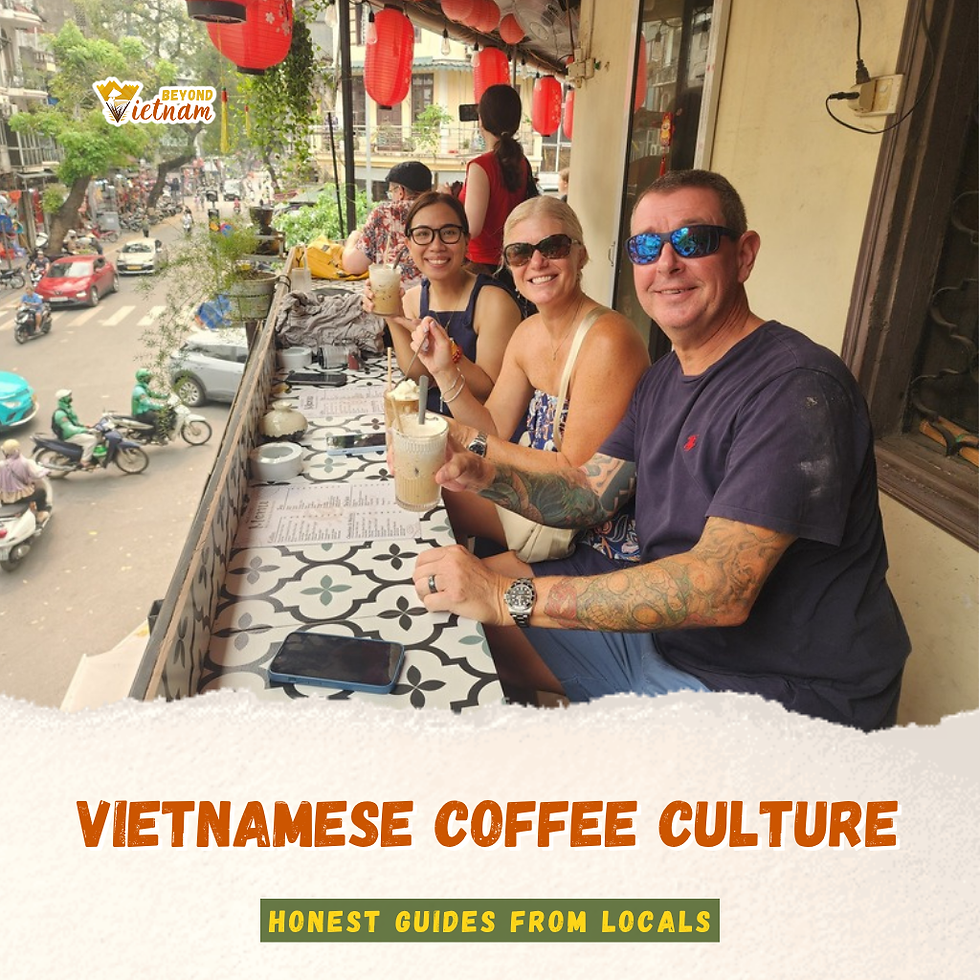
Notice how families serve guests, how streets change between morning and evening, and how people drink coffee. Even Vietnamese coffee culture changes depending on local habits and the way a city lives. These small details often tell you much more about a place than another checklist of famous attractions.
Food is often the easiest starting point because so much history and geography becomes visible through what people eat. A bowl of noodles can tell you something about local agriculture, climate, migration and family tradition without feeling like a history lesson. If Hanoi is your first stop, do not just collect a list of famous dishes. Ask when locals normally eat them, why certain ingredients belong together, how a family learned its recipe and what might change if you ordered something similar farther south.
Vietnam makes much more sense when you stop looking for one national template and start noticing how different communities adapted to their own land, history and circumstances. Perhaps that is one of the most interesting things about travelling here: the farther you go, the less it feels like there is only one Vietnam.
Dung (Emma) Co-founder of Beyond Vietnam
Xin chào! I’m Dung, but many travellers call me Emma. I grew up on the outskirts of Hanoi, and no matter how far I travel, this busy and slightly chaotic city still feels most like home.
I’ve explored Vietnam on my own and with the people I love, while also spending years volunteering and joining community projects. Along the way, I’ve collected plenty of stories, local tips and unforgettable moments. I share them here to help you feel closer to Hanoi and Vietnam, hopefully even before you arrive.
You can also find me on Facebook. Come and say hi!


Comments