


Vietnamese Cacao: An Origin Still Finding Its Audience
Updated: Sep 9
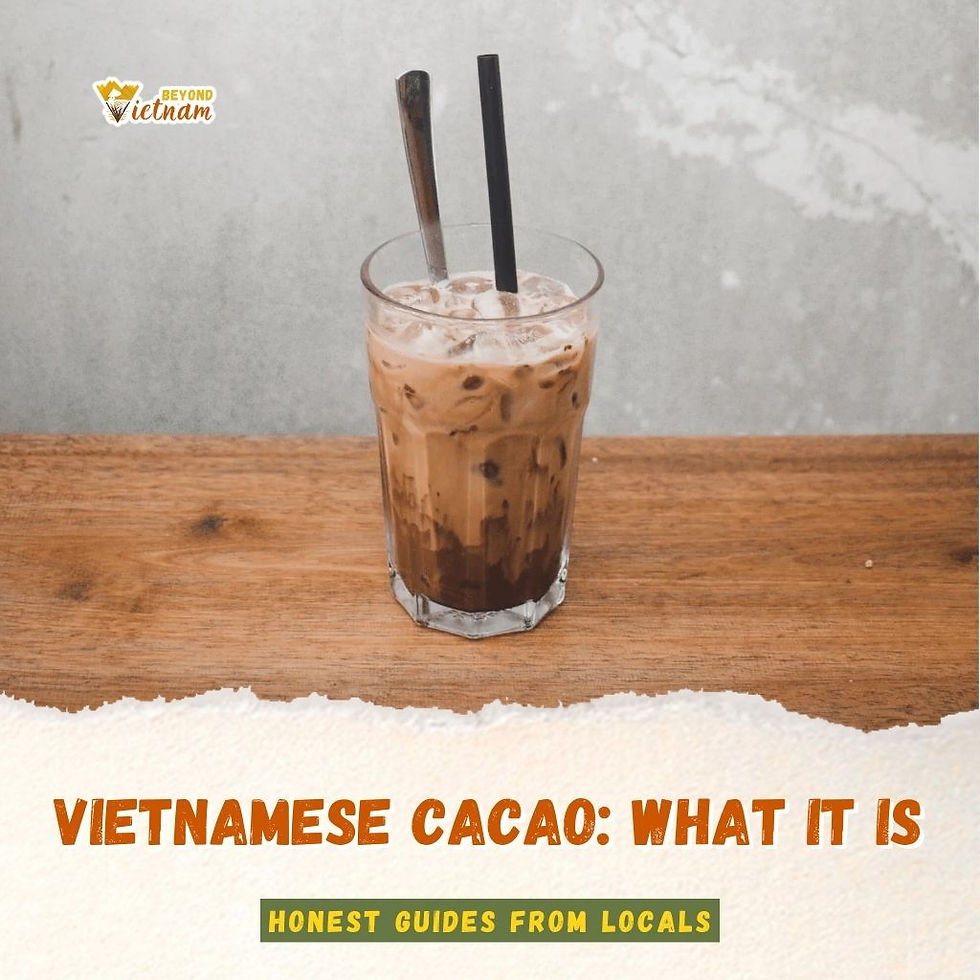
Ask most travelers where chocolate comes from and Vietnam rarely comes to mind, even though the country has grown cacao since French colonial administrators introduced it in the late nineteenth century. It's a smaller, quieter industry than Vietnam's coffee production, and one that's only recently started getting attention from chocolate makers looking for new flavor profiles.
A late start, a specific flavor
Vietnam's modern cacao industry largely took shape from the 1990s onward, much of it grown in the Mekong Delta and central highlands rather than around Hanoi itself. What sets Vietnamese cacao apart in tastings is a fruitier, slightly more acidic profile than cacao from West Africa, the source of most mass-market chocolate, closer in character to some Latin American origins, with fruit and citrus notes that come through clearly in a well-made bar.
Why it's still under the radar
Vietnam's cacao volume is small next to coffee, and most of what's grown historically went into bulk export rather than building a recognizable domestic identity the way coffee did. A handful of small producers and chocolate makers have started changing that in recent years, positioning Vietnamese cacao as a specialty origin rather than a commodity crop, but the shift is recent enough that most visitors, and even many Vietnamese city residents, have never specifically sought out Vietnamese-grown chocolate.
Tasting it against what you already know
Cacao grown in Vietnam, when made into chocolate with minimal added sugar, tends to taste noticeably different from the mass-market chocolate most travelers grew up with, less flat sweetness, more fruit and acidity up front. It's a useful comparison for understanding how much origin actually shapes flavor in chocolate the way it does in coffee or wine, something easy to miss when most chocolate on a supermarket shelf is blended from multiple origins into a single consistent taste.
Vietnamese cacao isn't trying to compete with coffee for the country's identity. It's a quieter story, still being written, and worth a taste for exactly that reason.
Where to Taste Vietnamese Cacao
Cacao doesn't have a dedicated tasting spot the way coffee does in Hanoi, but our Coffee Workshop includes it flexibly: as an alternative for guests who don't drink coffee, for children under 12, or simply on request. It's a smaller part of the session than the three coffee drinks, but it's there for anyone curious.
Related reading: Vietnamese Coffee Culture.
Dung (Emma) Co-founder of Beyond Vietnam
Xin chào! I’m Dung, but many travellers call me Emma. I grew up on the outskirts of Hanoi, and no matter how far I travel, this busy and slightly chaotic city still feels most like home.
I’ve explored Vietnam on my own and with the people I love, while also spending years volunteering and joining community projects. Along the way, I’ve collected plenty of stories, local tips and unforgettable moments. I share them here to help you feel closer to Hanoi and Vietnam, hopefully even before you arrive.
You can also find me on Facebook. Come and say hi!


Comments