


Bánh Khúc in Hanoi: Sticky Rice, Mung Bean and the Scent of Khuc Leaves
Updated: Sep 9
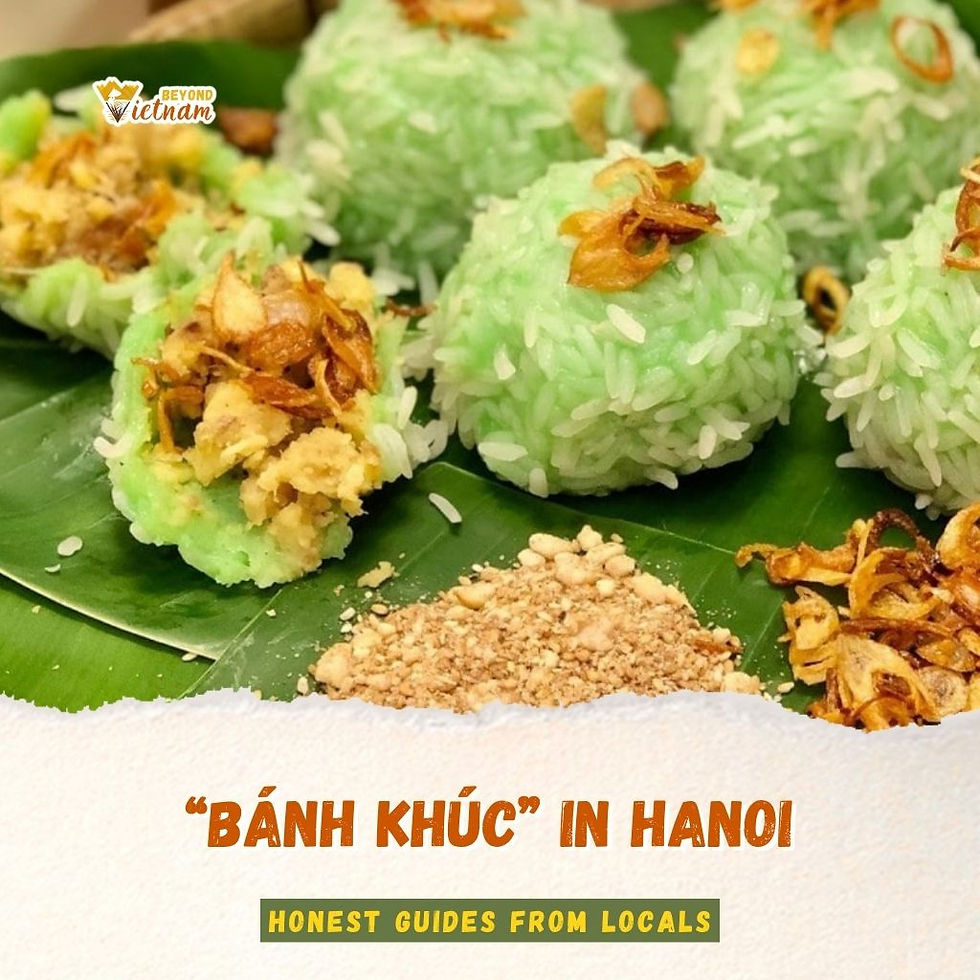
Bánh khúc is one of those northern foods that looks heavier than it tastes and smells more distinctive than it looks. From the outside, you see a warm mound of sticky rice. Inside is a soft green rice-flour layer scented with khúc leaves, then mung bean and seasoned pork at the centre.
What Is Bánh Khúc in Hanoi?
The defining ingredient is rau khúc, a wild herb traditionally found in northern fields. The leaves are worked into the glutinous-rice dough, giving the inner cake a muted green colour and a gentle herbal aroma. The filling is usually mashed mung bean wrapped around pork, creating layers of sticky, soft, nutty and savoury textures.
Why Is It Covered in Sticky Rice?
The inner cake is often steamed together with glutinous rice, so what you receive looks almost like a portion of xôi until you cut or bite into it. That outer rice keeps the cake warm and filling, which helps explain why bánh khúc works so well as breakfast or an evening snack in cooler weather.
What Does It Taste Like?
Expect less sweetness than the word “cake” suggests. Bánh khúc is savoury. The mung bean is creamy, the pork gives richness, the sticky rice is chewy, and the herb adds a quiet earthy note rather than a strong green-vegetable flavour.
Why It Feels So Northern
The ingredients are humble: rice, mung bean, pork and a field herb. Nothing is decorative. The pleasure comes from warmth, density and aroma, the same qualities that make many northern winter snacks feel comforting rather than flashy.
How to Eat It
Eat it warm. If it has been wrapped for takeaway, open it while the rice is still soft rather than letting it cool into one dense block. One bánh khúc can be surprisingly filling, so it works better as a small meal or shared snack than something to add casually after a large dinner.
For travellers who want a Hanoi food that rarely appears on international “top ten” lists, bánh khúc is exactly that kind of discovery: ordinary to locals, memorable once you understand what is hiding under the rice.
Dung (Emma) Co-founder of Beyond Vietnam
Xin chào! I’m Dung, but many travellers call me Emma. I grew up on the outskirts of Hanoi, and no matter how far I travel, this busy and slightly chaotic city still feels most like home.
I’ve explored Vietnam on my own and with the people I love, while also spending years volunteering and joining community projects. Along the way, I’ve collected plenty of stories, local tips and unforgettable moments. I share them here to help you feel closer to Hanoi and Vietnam, hopefully even before you arrive.
You can also find me on Facebook. Come and say hi!
Explore the bigger guide: Hanoi Afternoon Snacks


Comments