


Com and Cha Com in Hanoi: Green Rice, Autumn and a Very Hanoi Taste
Updated: Oct 25
⚡ Quick Local Summary • Single-Dish Family Specialists: Hanoi's most memorable street food comes from small family-run kitchens that perfect just one or two dishes and serve them during specific morning, lunch, or evening shifts. • Fresh Heat & Balanced Seasoning: Northern Vietnamese dishes emphasize fragrant bone broths, charcoal smoke, fresh green herbs, and tabletop condiments like garlic vinegar (Giấm Tỏi Ớt) and kumquat (Quất) so every diner can season their own bowl.
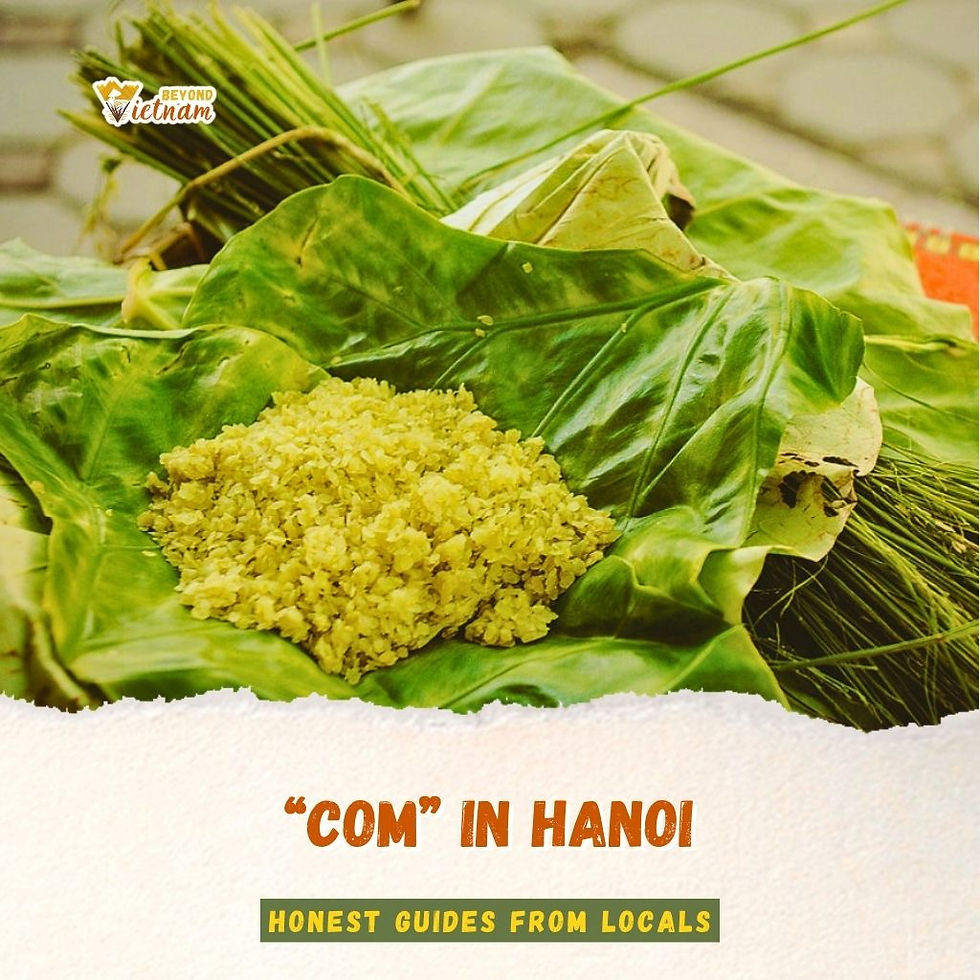
Few Hanoi foods are tied to a season as strongly as com. The pale green flakes appear when young rice is harvested, and for many locals their smell belongs to early autumn as much as cooler mornings or milk flowers. Com can be eaten simply with banana, used in sweets such as banh com, or mixed into savoury cha com. It is less a single dish than a small family of foods built around young rice.
What Exactly Is Com?
Com is young glutinous rice harvested before full maturity, then roasted and pounded into soft green flakes. Good com is tender, lightly chewy and fragrant rather than strongly sweet. The colour should look naturally pale green, not fluorescent. Traditionally it is wrapped in lotus leaves or other leaves that help protect its moisture and aroma.
Why Vong Village Matters
Hanoi's com tradition is most closely associated with Vong Village, an old rice-growing area now absorbed into the modern city. The craft developed around harvesting and processing young rice at exactly the right stage. Today you can buy com in many places, but the name Com Vong still carries cultural weight because it connects the food with the villages that once surrounded old Hanoi.
How Locals Eat Fresh Com
Fresh com does not need much. A pinch can be eaten slowly on its own or with ripe banana. The point is fragrance and texture, not sweetness. Eating it too quickly misses the subtlety. This is one of the rare Hanoi foods where 'plain' is not a lesser version; it is often the most traditional one.
What Is Cha Com?
Cha com combines ground pork with green rice flakes, then forms the mixture into patties that are steamed and fried. The outside becomes lightly golden while the inside stays juicy, with the com adding a gentle chew and fragrance. Cha com often appears with bun dau, in family meals, or simply as a snack.
Banh Com Is a Different Thing
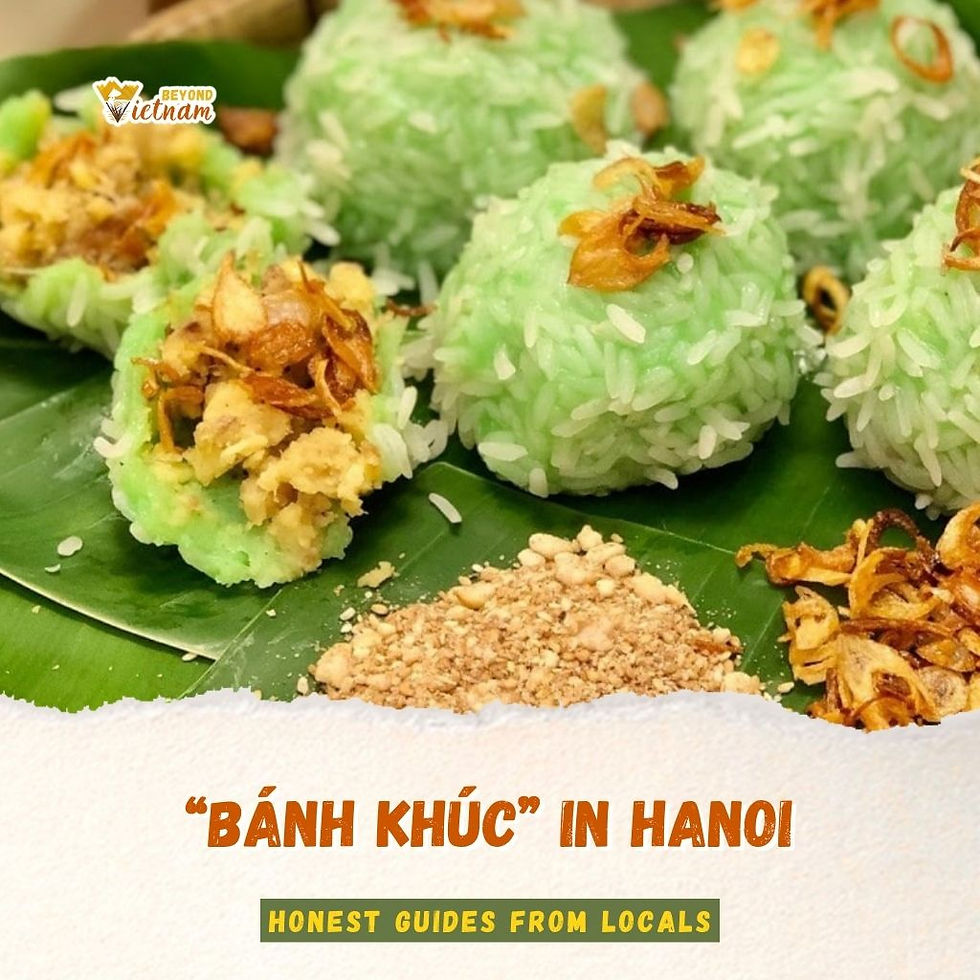
Banh com is a sweet green-rice cake filled with mung bean paste, traditionally associated with weddings and gift-giving in Hanoi. Travellers sometimes confuse it with fresh com because both are green. They share an ingredient, but the experience is completely different: one is delicate young rice, the other a dense sweet cake.
When Is the Best Time to Try Com and Cha Com in Hanoi?
Fresh com is most meaningful in autumn, especially around September and October, although preserved products and cha com are available more widely through the year. If you visit Hanoi outside the season, cha com or banh com can still introduce the flavour, but fresh seasonal com is the version locals become nostalgic about.
Continue Exploring Hanoi Food
Walking & Eating Through Hanoi With Us
If you would like to explore these neighborhood kitchens with a local friend who knows the families behind the stoves, join us on our daily Taste of Hanoi street food walk (running at 10:00 AM and 6:00 PM for 3 to 3.5 hours across 6 to 8 family-run stops, serving 6 to 7 full dishes plus a local cafe drink, with dedicated Veggie Delight and Off the Beaten Path routes available right on the booking form). Depending on your travel style, you can also combine history and food on Hanoi Eat & Explore or private car-based Hanoi Bites & Sights, bring the kids on our Hanoi Family Quest, or spend two cool hours at our $20 USD Cocoa-Coffee Workshop (9:00 AM and 2:00 PM). Message us anytime on WhatsApp (+84 969 655 521) if you want local tips for your trip.
Frequently Asked Questions
1. How do Hanoians spot a great street food stall in the Old Quarter?
Locals look for single-dish stalls that are busy during local meal rushes (breakfast from 6:30 AM to 9:30 AM, lunch from 11:30 AM to 1:30 PM, and dinner from 6:00 PM to 8:30 PM) where broths are kept at a rolling boil and dishes are cooked fresh to order.
2. Do Hanoi street food stalls accept credit cards, or should we carry cash?
Family-run sidewalk stalls and wet-market vendors operate almost exclusively with Vietnamese Dong (VND) cash for visitors. Carrying smaller banknotes (20,000, 50,000, and 100,000 VND notes) makes paying for bowls of noodles and drinks quick and easy.
3. How can vegetarians or travelers with food allergies order safely on the street?
Because clear broths often use pork or chicken bones and dipping sauces use anchovy fish sauce (Nước Mắm), simply saying 'no meat' is often misunderstood. Carrying a short written Vietnamese note on your phone explaining your exact dietary needs or visiting dedicated plant-based (Chay) kitchens is the safest approach.
Keep Exploring Hanoi with Us

Dung (Emma) · Co-founder of Beyond Vietnam Xin chào! I grew up on the outskirts of Hanoi, and no matter how far I travel, this busy and slightly chaotic city still feels most like home. I’ve explored Vietnam on my own and with the people I love, while also spending years volunteering and joining community projects. Along the way, I’ve collected plenty of stories, local tips and unforgettable moments. I share them here to help you feel closer to Hanoi and Vietnam, hopefully even before you arrive. You can also find me on Facebook. Come and say hi!

Comments